Budget Mesh System vs. Premium Single Router: We Tested Both in Real Houses to Find the Real Winner
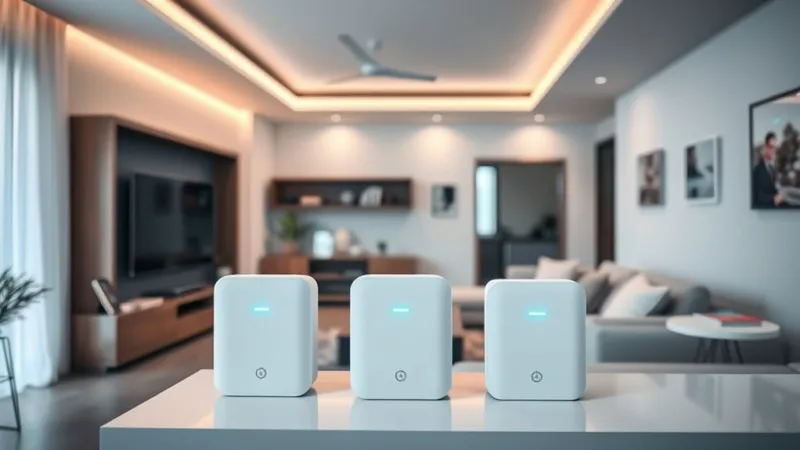
Photo: mesh wifi router system multiple nodes living room home, via strongmocha.com
Walk into any Best Buy and you'll face a choice that feels deceptively simple: spend $200 on a mesh kit with three nodes, or spend $300 on one really powerful single router. The marketing for both sounds convincing. The mesh box promises "whole-home coverage" and "seamless roaming." The premium single router box counters with "next-gen antenna arrays" and "enterprise-grade performance." Both can't be right for everyone. So which one actually wins when you take them out of the box and into a real house?
We tested both across four different homes to find out.
The Contenders and the Arenas
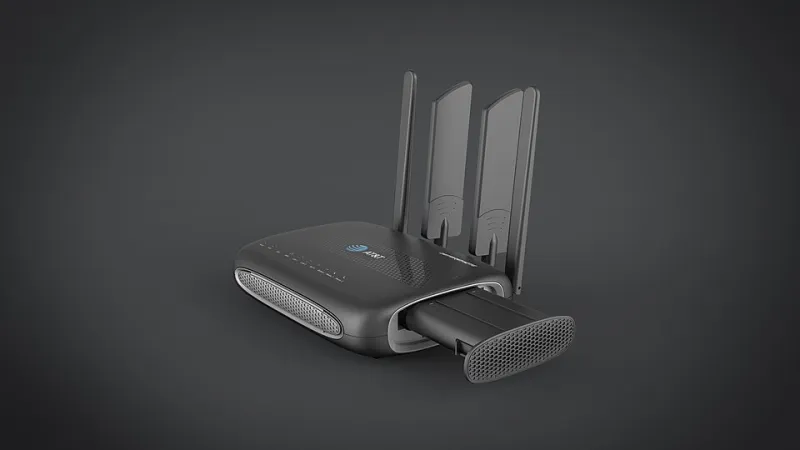
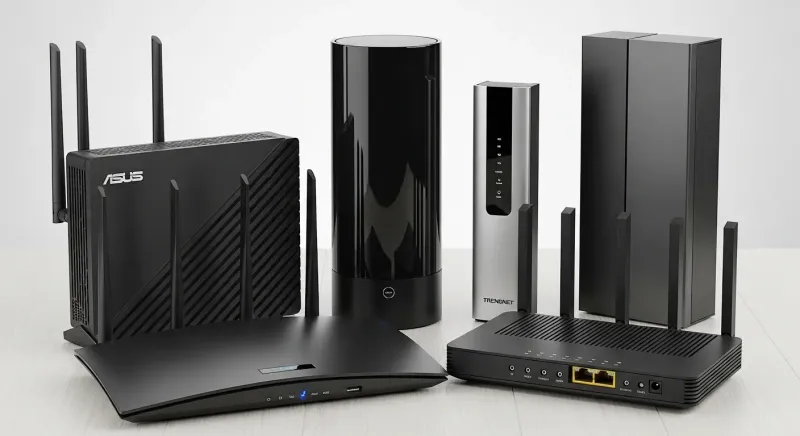
For the mesh side, we used a popular $200 three-pack that consistently sits near the top of sales charts — the kind of system you'll see recommended in every "best mesh router" roundup. For the single-router camp, we chose a $300 flagship unit from a different manufacturer, loaded with a high-powered antenna array and marketed heavily at the "serious home user" segment.
Our four test homes covered the range of what people actually live in across the US:
- A 1,200 sq ft single-story ranch house in the suburbs
- A 2,400 sq ft two-story colonial with a finished basement
- A 1,800 sq ft open-concept new construction home
- A 3,100 sq ft older home with thick plaster walls and a detached garage
In each home, we ran both systems for two weeks apiece, measuring throughput at standardized locations throughout the house, tracking latency, and paying close attention to performance at the edges of coverage — the back bedroom, the basement corner, the garage. We also noted how each system handled 25+ simultaneous connected devices, because that's the reality of most modern American households.
The Small House Result Nobody Expected
In the 1,200 sq ft ranch, the premium single router won. And it wasn't particularly close.
With a compact footprint and no multi-story obstacles, the flagship router's stronger radio hardware punched signal into every corner of the house without breaking a sweat. Average throughput across all test points came in about 22% higher than the mesh system, and latency was consistently lower — a meaningful difference if anyone in the house is gaming or on video calls.
The mesh system performed fine. Nobody would have complained about it. But in a smaller, open home, deploying three nodes is like bringing three people to do one person's job. The backhaul communication between mesh nodes adds overhead, and in a space where a single strong router can reach everything anyway, that overhead costs you more than it gives back.
Takeaway for small homes: If you're under about 1,500 sq ft with a relatively open layout, a premium single router is probably the smarter buy. You're paying for capability you'll actually use.
Where Mesh Started to Pull Ahead
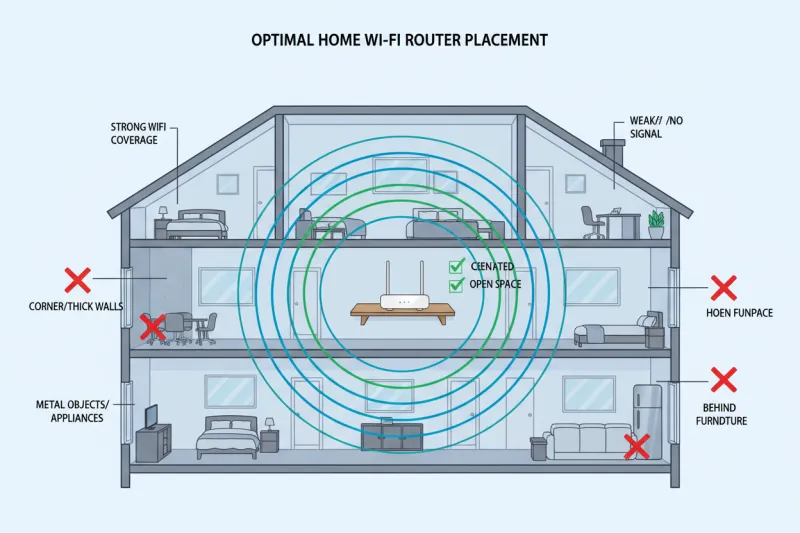
The two-story colonial is where the story flipped. The single router, placed centrally on the main floor, did a reasonable job — but the basement and the far end of the second floor told a different story. Throughput in those locations dropped to roughly 35-40% of what we measured near the router. The mesh system, with nodes placed on each floor, maintained consistent speeds throughout. We're talking about 3-4x better performance in the weak spots, which is not a rounding error.
More importantly, the mesh system handled device handoffs smoothly as people moved through the house. The single router created a situation where devices would stubbornly cling to a weak connection rather than finding a better one — a classic WiFi problem that mesh architectures are specifically designed to solve.
The open-concept new construction fell somewhere in between. The lack of walls helped the single router more than expected, but the mesh system still edged it out in the far corners. The margin was smaller than in the colonial, but mesh won.
The Old House With Thick Walls: Mesh Dominates
The 3,100 sq ft older home with plaster walls was the most decisive result of the whole test. Plaster walls, especially older ones with metal lath, are WiFi's natural enemy. The single router's signal degraded dramatically with each wall it had to penetrate. By the time we measured in the back of the house or the detached garage, we were seeing speeds that made the connection practically unusable for anything demanding.
The mesh system, with nodes distributed throughout the space, sidestepped the problem almost entirely. Instead of fighting through four layers of signal-killing plaster, each node only had to reach the next one — and the backhaul handled the rest. Coverage in the garage, connected via the node nearest the back of the house, was genuinely usable. The single router's garage coverage was not.
If you live in an older American home — a craftsman, a colonial, anything built before drywall became standard — mesh isn't solving a problem you don't have. It's solving a very specific problem that your walls are creating.
The Cost Equation
Here's where the math gets interesting. The $300 single router beat the $200 mesh kit in small spaces, but only by spending more money. If you have a small home, you could also buy a $150 mid-range single router and get perfectly good results — meaning the premium single router's advantage in that scenario is partly a function of the price gap, not just the form factor.
In larger or more complex homes, the mesh system's $200 price tag undercuts the single router while delivering better real-world coverage. You'd need to spend significantly more on a premium mesh system to get meaningfully better performance than the budget kit delivered in our multi-story and older-home tests.
The Bottom Line
The answer, predictably, depends on where you live — but the breakdown is clearer than the marketing would have you believe:
Go with the premium single router if: Your home is under 1,500 sq ft, mostly open plan, single-story, and built with standard drywall construction. You'll get faster speeds and lower latency without the overhead of a mesh backhaul.
Go with the budget mesh kit if: You have a multi-story home, thick or older walls, a basement you actually use, or a detached structure you want to cover. The coverage consistency advantage is real and significant, and at $200 for three nodes, the value is hard to argue with.
Mesh systems didn't take over the market by accident. But they also didn't make single routers irrelevant. The right answer is the one that matches your actual floor plan — not the one with the better box art.